
In a year when global demand weakened and financing conditions tightened, the Turkish woodworking machinery sector maintained its resilience and demonstrated a balanced performance. Although some traditional markets contracted, the sector maintained its export focus and strengthened its presence in new markets.
2025 was a period of weak global demand and more selective investment decisions. In this environment, the Turkish woodworking machinery sector maintained its operational balance despite the general slowdown. Production amounted to 354.1 million dollars throughout the year, with a limited decline of 5.4 percent compared to the previous year. Exports amounted to 143.4 million dollars, while imports amounted to 107.2 million dollars.
At the end of the year, the ratio of exports to imports was 134 percent, while the foreign trade surplus was recorded at 36.2 million dollars. This picture showed that the foreign trade balance was maintained despite the slowdown in the growth rate. The increase in imports, on the other hand, pointed to mobility in demand composition and supply preferences.
The biggest export market of the sector in 2025: Syria
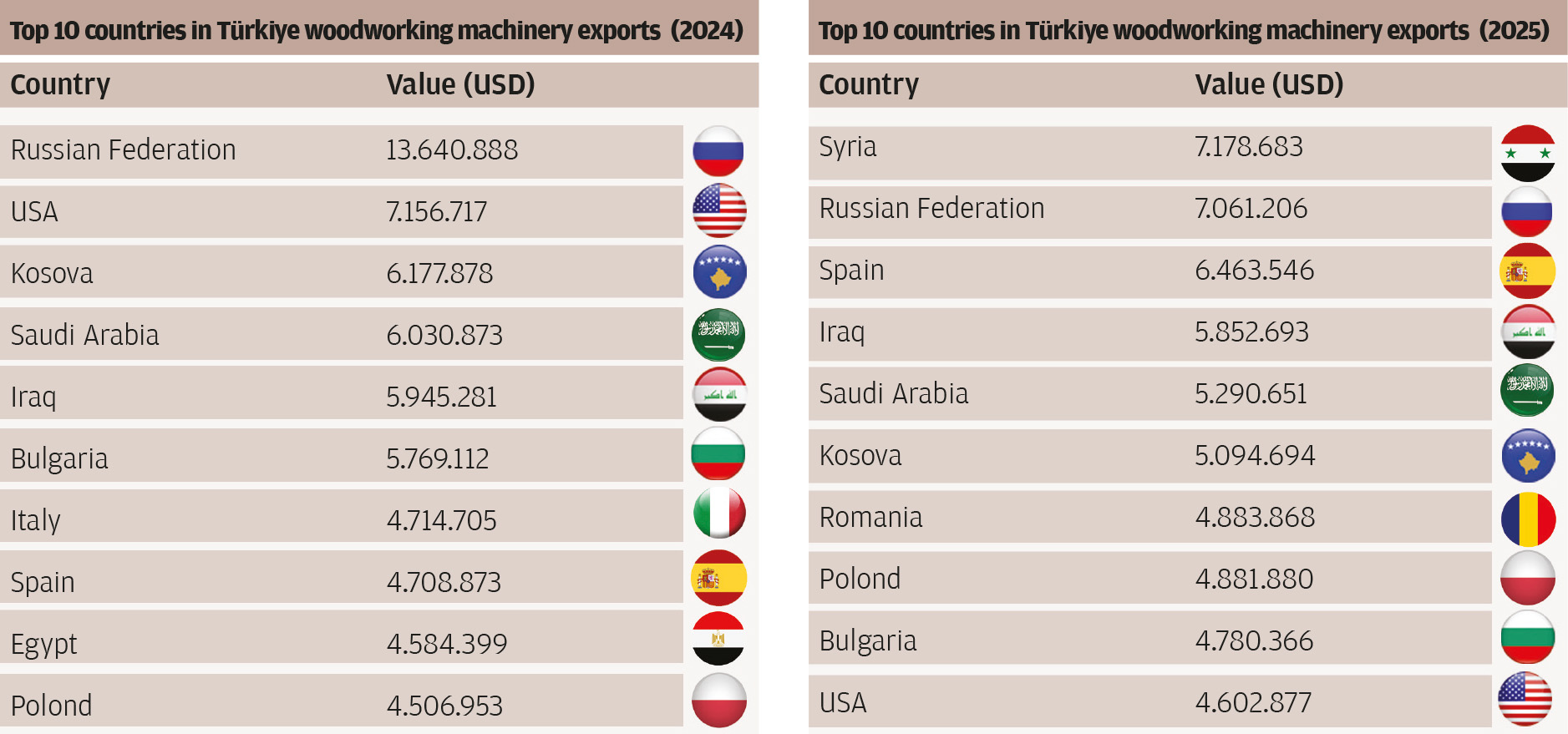
In 2025, there was a significant rebalancing in the market distribution of exports. Syria became the sector’s largest market with a rapid rise in export volume from approximately 50 thousand dollars to over 7 million dollars. This rapid climb seems to be linked to the revival of commercial life in the country after the relative stagnation of political tensions that have suppressed economic activities for a long time. On the other hand, exports to Russia, one of the strong markets of the previous years, fell by almost half to 7 million dollars, while exports to the US market dropped from 7.1 million dollars to 4.6 million dollars. While this contraction in high-volume markets put downward pressure on total exports, increases in other markets limited the decline in total exports.
Geographical diversity in exports strengthened
Exports to Spain rose to $6.4 million, ranking the country third. While the Iraq market remained stable, declines were seen in Saudi Arabia, Kosovo and Bulgaria. While a limited increase was recorded in Poland, Romania’s rise to the top ranks signaled a partial repositioning of demand within Europe. While the picture shows that the sector continues to expand its exports to different geographies, the change in market structure requires a more selective planning in terms of product mix, pricing and commercial conditions.
Chinese influence at the forefront in the increase in imports
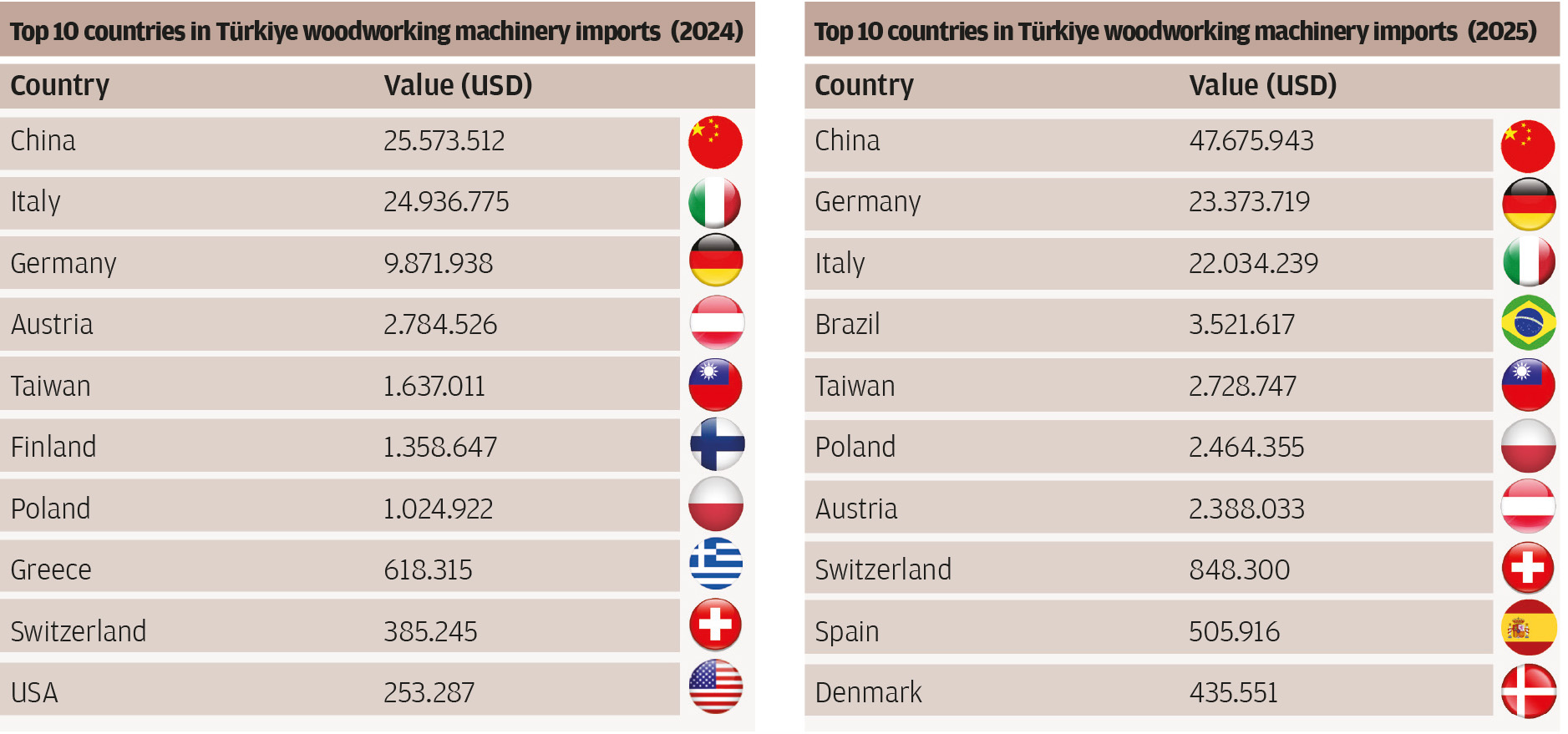
The upward trend in imports stood out in 2025. Imports from China increased from $25.5 million to $47.6 million, while imports from Germany rose from $9.8 million to $23.3 million. Although imports from Italy declined, this decline had a limited impact on the total import volume. In addition, the increase in the share of Brazil, Denmark and Spain in imports showed that the sources of supply are spread across different geographies.