The production of furniture for non-residential areas has become a separate field of work in the industry in recent years. Furniture used in hotels, restaurants, and commercial projects stands out not only for its design but also for its durability, sustainability, and project management requirements. Sancrea, which operates in the field of project furniture, continues its work with project-based productions for different areas of use. Yusuf Seçgin, Chairman of the Board of Sancrea stated that the countries they most frequently encounter in this segment are Italy, Spain, Poland, and China, adding that Türkiye’s most important advantages in this area are fast production, flexible structure, and the ability to develop project-specific solutions.
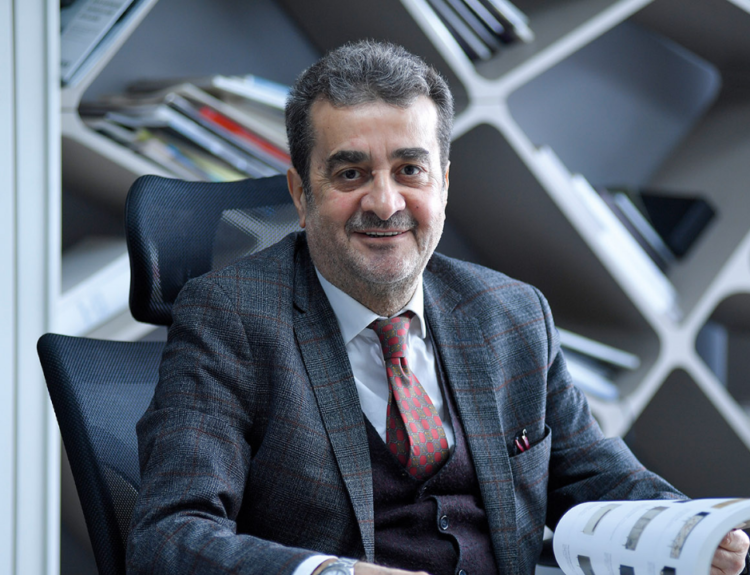
The furniture industry has evolved into a structure where project-based production has gained prominence in recent years; solutions for hotels, restaurants, and commercial spaces have formed a distinct area of expertise within the sector. Sancrea, a company operating in the field of project furniture, has come to the forefront of the industry with its productions for hotel, restaurant, and commercial projects. The company stands out with its approach focused on project needs shaped according to different usage areas. As part of our Furniture Interviews series, we met with Yusuf Seçgin, Chairman of the Board of Sancrea, to discuss the current dynamics of the project furniture market, expectations for the coming period, and prominent topics in customer demands.
- Can you briefly introduce Sancrea?
We position Sancrea as a brand that has been manufacturing project furniture in Bursa, İnegöl since 2012, combining design and production under one roof. We produce wooden, metal, and aluminum furniture for hotels, restaurants, and commercial projects. We operate in a 70,000 square meter facility with a team of 400 people and a monthly production capacity of 30,000 units.
- How was 2025 for the sector? What are your expectations for 2026?
I consider 2025 to be a cautious but healthy year for the sector. In 2026, I foresee sustainable growth for companies that plan correctly, have a strong production infrastructure, and focus on quality.
“While durability is paramount in hotel projects, brand language is decisive in restaurants”
- You are a long-term project partner for hotels, restaurants, cafes, bars, architecture firms, etc. What are the distinguishing features of these projects?
We approach each project based on its intended use and target users. While durability and longevity are paramount in hotel projects, concept and brand language are decisive factors in restaurants and cafes. When working with architecture firms, we develop completely project-specific and flexible solutions.
- What has been drawing attention in customer demands recently?
Customers now expect a solution that covers the entire process, not just the product. Durability, clear budget management, on-time delivery, and project-specific design requests are becoming increasingly prominent.
“We see sustainability as an integral part of our business”
- What design and material trends will be prominent in 2026? Could you tell us about your approach to sustainability?
I think simpler, timeless, and longer-lasting designs will be prominent in 2026. Natural textures, modular systems, and ergonomics are no longer a preference but are becoming the standard. We see sustainability as an integral part of our business. We aim to develop products that are both environmentally conscious and durable through certified raw materials, eco-friendly surfaces, and efficient production processes.
“We value domestic machines in terms of performance, service speed, and efficiency”
- What is the role of domestic machines in production?
We use domestic machines in approximately 50–60% of our production line. We value domestic machines in terms of performance, service speed, and efficiency, and we aim to increase this ratio.
“Türkiye’s difference lies in its fast production, flexible structure, and ability to develop customized solutions for projects”
- Who are Türkiye’s competitors in this field?
Italy, Spain, Poland, and China are the countries we encounter most frequently in this segment. Türkiye’s difference lies in its rapid production, flexible structure, and ability to develop customized solutions for projects. This makes us particularly strong in boutique projects.