Türkiye’s machinery exports increased by 1.5 percent in the first nine months of the year, reaching $21.3 billion. Sevda Kayhan Yılmaz, President of the Machinery Exporters’ Association (MAİB), highlighted growing competitive pressures in global markets and emphasized the importance of timely preparation for new regulations and regulatory compliance in maintaining the Turkish machinery industry’s competitiveness in the European market.
According to data published by the Machinery Exporters’ Association (MAİB), Türkiye’s total machinery exports, including those from free zones, increased by 1.5 percent in the first nine months of the year compared with the same period of the previous year, reaching $21.3 billion. During this period, export volume declined by 6 percent in tonnage terms, while the average export unit price rose to $8.7 per kilogram. Machinery exports to Germany, which remained Türkiye’s largest export market in this sector, increased by 8.7 percent to exceed $2.5 billion, while exports to the United States grew by 27.6 percent, approaching $1.8 billion. Among the subsectors, internal combustion engines and their components ranked first, with exports totaling $1.8 billion. Other subsectors exceeding the $1 billion export threshold included construction and mining machinery, pumps and compressors, washing and drying machines, tractors, agricultural and forestry machinery, as well as turbines, turbojets and hydraulic cylinders. Annualized machinery exports stood at $28.8 billion, while machinery imports increased by 4.6 percent to $47 billion over the same period.
Drawing attention to the emergence of new areas of competition in international trade amid downward revisions to global economic growth forecasts this year, Sevda Kayhan Yılmaz, President of the Machinery Exporters’ Association, stated: “Over the past two years, trade between the United States and China has contracted by more than 20 percent. Against this backdrop, China has pursued market diversification, increasing its exports by 36 percent in September compared with the same month of the previous year. This demonstrates how China is intensifying competitive pressure worldwide through its scale and pricing. The EU’s trade deficit in goods with China, which reached €360 billion in 2025, was recorded at €200 billion in the first half of 2026, further deepening concerns over the competitiveness of European industry. European industrial companies’ calls for stronger trade defense instruments against imports and stricter inspections to ensure imported products comply with EU standards form part of broader strategies to shape competition through technical compliance. One aspect of this approach is the agreement reached by France and Germany on a joint proposal concerning ‘Made in EU’, which introduces EU-origin requirements for net-zero technology products. Although the draft initially targets the automotive sector, this does not mean its scope will remain limited to that industry. Once the definition of origin is clarified, there is a risk that other industrial sectors will also be brought within its scope and that investments will shift toward countries capable of meeting the origin requirements.”
“Timely preparation and regulatory compliance will also help maintain the Turkish machinery industry’s competitiveness in the European market”
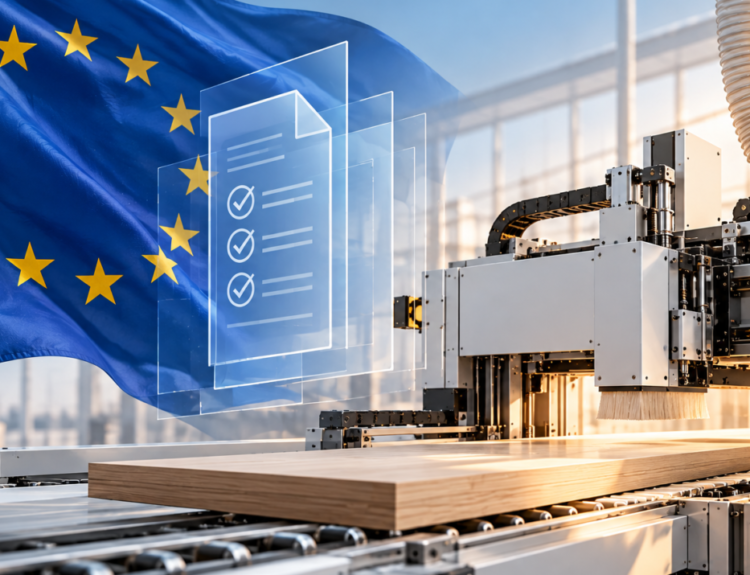
Emphasizing the importance of the Machinery Safety Regulation prepared by Türkiye’s Ministry of Industry and Technology on the basis of the European Union’s Regulation (EU) 2023/1230 on machinery, Yılmaz also stressed the need to proceed without delay with legislative work concerning related EU regulations: “The Machinery Safety Regulation, some provisions of which entered into force last week while others will take effect in January, expands the responsibilities of our manufacturers in demonstrating product safety and compliance with technical regulations. Our manufacturers need to assess the extent to which their existing products meet the new requirements and develop concrete compliance plans to address any shortcomings. However, regulatory compliance should not be regarded as a process that businesses must manage solely through their own resources. Preparations should be carried out through coordination between the public and private sectors. In particular, industry associations and professional organizations sharing their technical knowledge and practical experience with public institutions will help identify implementation needs accurately and contribute to regulatory harmonization. Nevertheless, regulatory preparations should not be limited to this regulation. Related EU legislation, such as the Cyber Resilience Act and the Data Act, should also be assessed individually in terms of their legal status in Türkiye, the need for alignment with national legislation, and the potential obligations they may impose on companies placing products on the EU market. While EU regulations are directly applicable in EU Member States, they do not automatically become part of Türkiye’s domestic legal framework. Therefore, harmonization efforts in areas requiring amendments to national legislation must be completed without delay. Timely preparation and regulatory compliance will not only help fulfill legal obligations but also contribute to maintaining product quality, customer confidence, and the Turkish machinery industry’s competitiveness in the European market.”