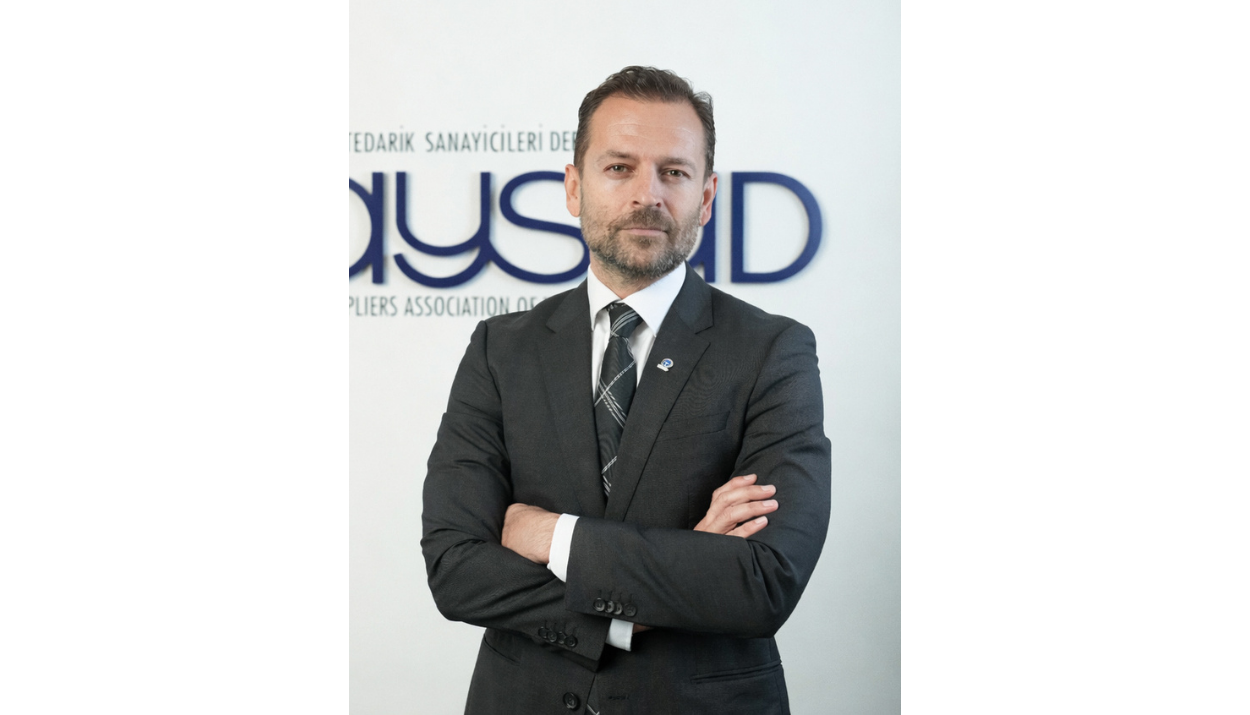
Competition in the European market is no longer shaped solely by price; production flexibility, engineering capabilities, quality standards, delivery capabilities and supply reliability are becoming increasingly decisive. Türkiye’s manufacturing industry, meanwhile, has accumulated significant experience in these areas over the years. We evaluated the key characteristics that distinguish Turkish manufacturers from their European competitors, the production strength of the automotive industry and the competitive advantages of Turkish suppliers in the European market with Yakup Birinci, Chairman of the Board of Directors of the Automotive Suppliers Association (TAYSAD).
Türkiye stands out in the automotive industry not only with its high export volume, but also with its production capabilities, engineering infrastructure, flexible supply structure and strong industrial integration with Europe. Turkish suppliers, which have been working with Europe’s leading automotive manufacturers for many years, have a significant competitive advantage thanks to their ability to quickly adapt to changing production needs, as well as their quality and delivery standards. We discussed the production strength of the Turkish automotive industry, its position in the European market, the characteristics that differentiate Turkish manufacturers and how the sector can further advance its competitiveness in the coming period with Yakup Birinci, Chairman of the Board of Directors of the Automotive Suppliers Association (TAYSAD).
- Automotive is one of the strongest sectors in Türkiye’s exports. How do you evaluate the position of the Turkish automotive industry in the European market?
The position of the Turkish automotive industry in the European market is quite strong. Increasing its exports by 11.6% in 2025 and achieving exports of $41.5 billion, our sector became Türkiye’s export champion. The fact that $30.11 billion, corresponding to 72.5% of these exports, were made to EU countries shows how strong an economic and industrial integration we have with Europe. Today, Türkiye is not only an important part of production and supply chains for the European automotive industry, but also an important market. The EU’s automotive exports to Türkiye amounted to $28.95 billion in 2025, making Türkiye the EU’s third-largest automotive export market after the United Kingdom and the United States. We have reached this position thanks to the production infrastructure we have developed over the years, our quality standards, our engineering capabilities and the strong business relationships we have established with manufacturers in Europe. Another important point is the investments of European brands in Türkiye and Türkiye’s increasingly growing share within the value chains of these brands. Many foreign brands carry out R&D activities in Türkiye in addition to production, including their main industry operations. Therefore, we need to position Türkiye as not only a supplier but also a strategic industrial partner from Europe’s perspective.
“Companies in Türkiye have been working with Europe’s leading automotive manufacturers for many years”
- What characteristics do you think are decisive in European automotive manufacturers’ preference to work with Turkish suppliers?
The value of the Turkish automotive supply industry for Europe needs to be evaluated under several headings. First of all, our strong production infrastructure, integrated supply chain network, quality standards and international production experience are important advantages. Companies in Türkiye have been working with Europe’s leading automotive manufacturers for many years. During this process, we have gained significant experience in terms of quality, delivery and production standards. This makes Turkish suppliers reliable and predictable business partners for manufacturers in Europe. In addition, our flexible production capabilities and geographical proximity to Europe are also important advantages. Our ability to respond quickly to changing customer demands, our strong logistics connections and shorter and more manageable supply chains create value for manufacturers in Europe. In the coming period, however, we need to support these advantages with technology and engineering capabilities.
- Concepts such as sustainability and digitalization have recently come to the forefront in the European market. How do you evaluate the position of Türkiye’s manufacturing industry in these areas?
Türkiye’s manufacturing industry has a strong foundation capable of adapting to this transformation, with its production strength, engineering capabilities and supply infrastructure. However, in global competition, efficiency, digitalization and sustainability, in addition to production capacity, are now decisive factors. Especially in the European market, energy efficiency, carbon footprint and supply chain resilience are coming to the forefront. In the automotive supply industry, the importance of new technology areas such as software, electronics, batteries and power electronics is increasing with electric, autonomous and connected vehicles. Therefore, our sector needs not only to follow this transformation but also to reach a position where it develops and implements new technologies. As TAYSAD, the Mobility Technologies Fund, which we support, is also one of our important initiatives in this transformation process. While accelerating the emergence of domestic solutions in critical technologies and components in which we are currently dependent on foreign sources, we aim to advance the competitiveness of our supply industry in Europe through technology and high added value.
“What differentiates us is our engineering and flexible production capabilities”
- Based on the automotive industry’s long-standing production relations with Europe, what do you think are the key characteristics that distinguish Turkish manufacturers from their competitors in the European market?
One of the most important advantages of Türkiye’s manufacturing industry in the European market is the production experience and flexible working capability it has developed over the years. Our automotive industry has been in close cooperation with manufacturers in Europe for many years. During this process, Turkish companies have undertaken important roles in the value chain of the European automotive industry in areas such as quality, delivery, cost and technical requirements. These production and supply capabilities offered by Türkiye have also enabled the European automotive industry to achieve a more competitive structure. Another factor that differentiates us is our engineering and flexible production capabilities. Technological transformation and customer expectations are changing rapidly in the global automotive industry. Turkish suppliers have a production structure that can adapt to different product and customer groups and quickly adapt to new projects. Our strong supply industry ecosystem and qualified human resources also support this structure. Thanks to this, including during the pandemic period, production lines never stopped thanks to Turkish suppliers. At the same time, increasing labor, financing and logistics costs are challenging our competitiveness. Therefore, we need to support our production advantages inherited from the past with efficiency, technology and higher added value.
“Türkiye is part of an integrated production and supply structure with the European automotive industry on the basis of the Customs Union”
- How do you foresee Europe’s production and supply structure taking shape in the coming period? How might the role of Türkiye’s manufacturing industry in this structure change?
We expect Europe to turn toward more resilient and reliable supply chains in the coming period. Geopolitical developments, changing trade policies and the transition to electric vehicles are causing production decisions to be reconsidered. In this process, it is of great importance not only for Europe to strengthen its own production capacity but also to preserve the existing production and supply ecosystem it has built over the years. The economic and industrial integration between Türkiye and Europe is also an important advantage at this point. Indeed, trade in goods between Türkiye and the EU reached a record level of 217.6 billion euros in 2025. Of this, 114.3 billion euros consisted of EU exports to Türkiye, while 103.3 billion euros consisted of Türkiye’s exports to the EU. These figures clearly demonstrate the reciprocal nature of the trade relationship between Türkiye and Europe and how strongly the two sides are integrated economically and in terms of production. For more than 30 years, Türkiye has been part of an integrated production and supply structure with the European automotive industry on the basis of the Customs Union. The fact that European automotive manufacturers have invested more than 20 billion euros in Türkiye over the last 20 years is also among the concrete indicators of this integration. Today, the Turkish and European automotive industries are integral parts of the same production and supply ecosystem.
At this point, the European Union’s Industrial Accelerator Act (IAA), aimed at strengthening industrial competitiveness, and the “Made in EU” approach that has emerged alongside it are of critical importance. Evaluating Türkiye within this structure will contribute to Europe’s industrial resilience, supply security and global competitiveness. An approach that excludes Türkiye, meanwhile, would create uncertainty in this strong integration built over the years while also potentially negatively affecting the competitiveness of the European automotive industry. We believe that Europe can increase its competitiveness not by excluding Türkiye, but by acting together with Türkiye. Türkiye’s inclusion in an inclusive “Made in EU” approach as a Customs Union partner and strategic industrial partner will support the shared competitiveness of both Europe and Türkiye. As TAYSAD, together with the Automotive Industry Exporters’ Association (OIB) and the Automotive Manufacturers Association (OSD), we continue our contacts in Brussels and Ankara on this matter and continue our efforts to preserve the strong production and supply integration between Türkiye and Europe.