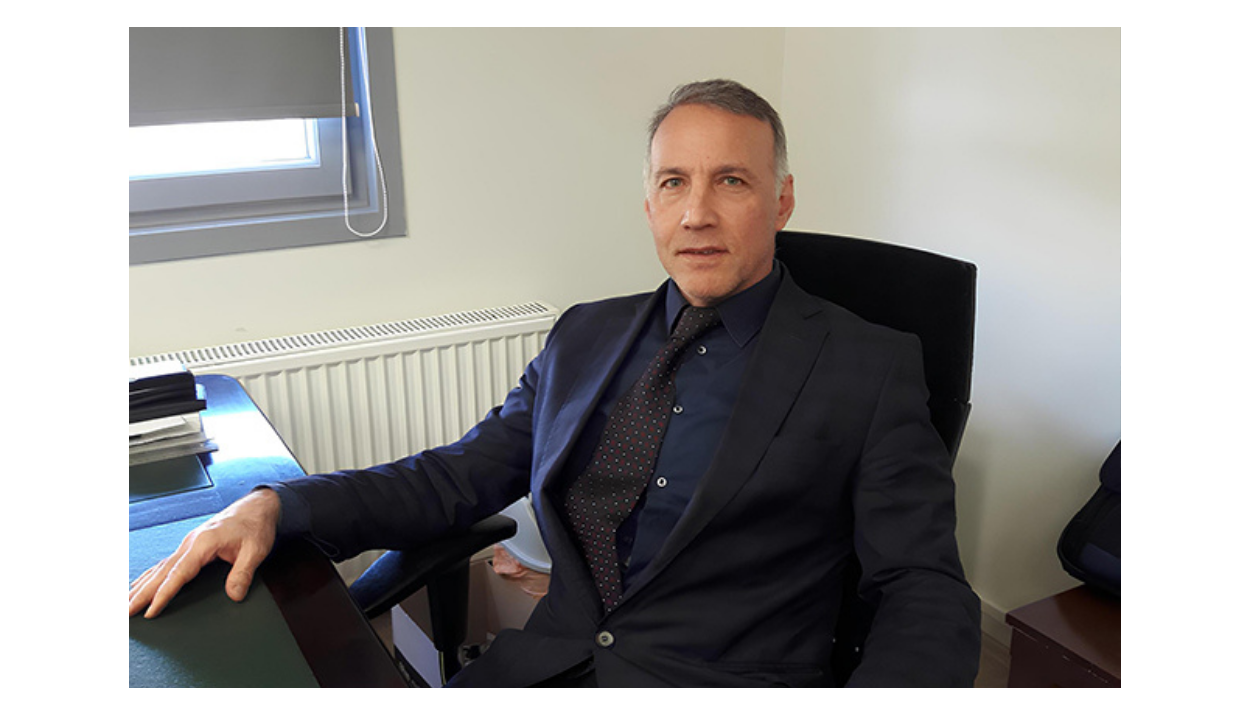
The global production and trade system has been reshaped by the successive crises of recent years. Not only low cost, but also supply continuity, logistical flexibility and risk management are among the strategic priorities for companies. In this new era, economies of scale and cooperation between companies have become more decisive. Thanks to its geopolitical location, production infrastructure and raw material potential, Türkiye is considered to be one of the more prominent countries in the global supply equation. We discussed the reflections of this transformation on the business world and the new road map for companies with Attila Arsan, General Manager of the Ortak Satınalma Organizasyonu (OSO).
The disruptions in production and logistics networks on a global scale with the pandemic clearly demonstrated how fragile supply chains can be. This process has led companies to develop more resilient and secure supply models instead of traditional cost-oriented approaches. Attila Arsan, General Manager of Ortak Satınalma Organizasyonu (OSO), shared his views on how the disruptions in supply chains in the post-pandemic period permanently affected global production balances. Arsan stated that companies should now develop strategies that focus not only on cost but also on supply security, and that it is especially important for SMEs to establish joint structures to create economies of scale.
- In recent years, we have started to hear the concept of supply chain much more frequently. Why has supply chain become such a critical issue today?
This issue became very important after World War II. Japan, which had no resources such as oil, natural gas, etc., established large purchasing companies such as Sumitomo, Mitsubishi, CITOH, etc. as a state project. Through them, it started to open offices in developed regions of the world. It opened offices in New York, Washington, Berlin, London, London, Rome, Paris and even Istanbul. These were generally raw material purchasing offices. They mainly imported Japan’s urgent development needs such as petrochemicals, machinery, minerals, etc. In the process, Japan embarked on a massive development drive, primarily producing and exporting automobiles, optics, TV, video (electronics), cameras and construction equipment. Eventually, this operation, which had started as an acquisition, began to produce a win-win situation. This Japanese success triggered a process of research and scientific study of the supply chain at universities in the USA. The scientific process that emerged led USA companies to develop a procurement systematic in this way. The process evolved towards a procurement systematic called JIT (Just In Time). The reflection of this historical process in the world in Türkiye triggered the implementation of a policy with the establishment of sectoral foreign trade companies in the 1990s. In other words, it paved the way for the structure established by the companies to make joint exports and gain advantages. The aim was for companies to establish a commercial export company that enhanced their ability to collaborate, even without joint procurement. However, the crisis was catching up with Small and Medium-sized Enterprises (SMEs) and they needed to come together for large purchases. Large companies were able to do this by always buying in scale at advantageous prices. While SMEs had established associations and non-governmental organizations, they were lacking in establishing a joint stock company. That is, until 2006, when the Ortak Satınalma Organizasyonu (OSO), a partnership of 110 companies, was seen to have a huge purchasing potential. As a result, a model was created. OSO still exists and continues to grow in various fields.
“It took 5 years for supply and production to pick up where it left off”
- What basic lessons did the supply and logistics problems experienced in the post-pandemic period teach companies about the supply chain?
The reflection of the pandemic on the world was primarily as follows; China, the world’s largest supplier country, closed its production gates. Thus, the world logistics system collapsed. The vast majority of companies survived with the personnel support provided by the state. This resulted in inflation as a result of central banks printing money. The collapse of the supply chain left this unpleasant legacy to the aftermath of the pandemic. It took 5 years for supply and production to pick up where it left off, but price behavior, especially in Türkiye, has still not stabilized.
As a result, developed countries are contract manufacturing on a large scale in the Far East for economic reasons. China has the largest share in areas such as large-scale automotive, electronics and machinery. China continues to feed the world thanks to its national policy, its educated and hardworking workforce and the subsidies it provides. This is easy for the US and EU countries. The increase in China’s technology and power, especially with the development of new rail trade routes, has already brought quality back to pre-pandemic levels. The US administration wants to get rid of its dependence on the Far East for raw materials, semi-finished and finished goods. Its efforts in this regard are unfolding before our eyes as economic policy. The goal is to get rid of Far Eastern hegemony in raw materials and labor. This is why the issue of rare mineral deposits in Greenland, Ukraine, Russia and Türkiye is very much on the agenda. What Türkiye needs to do in this regard is to establish integrated facilities to transform the raw materials in its own territory into end products and finished products. This is what the public sector has done in the past for aluminum and iron and steel. They are not tasks that the private sector can be expected to do alone. A public-private sector cooperation model should be developed for this.
“What businesses need to do is to step into the major leagues by establishing joint stock companies together”
- How do global developments, such as trade and strategic tensions between the US and China, affect supply chain decisions? How are companies positioning themselves against these risks?
One of the trade tensions between the US and China is the control of rare elements, the other is US bonds held by China and the Chinese Central Bank’s demand for gold. The US wants to move from raw materials to finished products, and it wants to do this without being dependent on China for both labor and ore. At this stage, the US is also experiencing turmoil on the domestic front. It seems that they will not be able to give up the ease of supply from China. Meanwhile, the EU will be left with two options. It will continue to depend on either the US or China for its chip and related technological needs. As an ally and trade partner of the EU, Türkiye is likely to follow this path. Because starting from ore and reaching the final technological product requires the formation of multi-billion dollar state-supported models. For example, very large technological facilities and investments can only take shape through the initiative and labor force of industrialists affiliated with the relevant regional Chamber of Industry and Commerce, and the land, factory and initial investment cost type models provided by the state.
As a result, what SMEs need to do at this stage, beyond associations and NGOs (Non-Governmental Organizations), assuming responsibility, is to step into the “major leagues” by establishing joint stock companies together, albeit with small capitals. With the size they will reach in the process, they will find opportunities to go public and develop exports. Some of the joint stock companies to be established in this way will grow very large, and they will have the opportunity to become like the giant Japanese companies mentioned above. We, as OSO, have started out with this method and have achieved significant gains in both supply and sales.
“Türkiye is in a position of being aligned with Western-oriented values”
- Where do you see Türkiye in the supply chain in this global transformation? What is the main reason why Türkiye has been on the agenda more recently?
Türkiye, due to its geopolitical position on the world map, is generally a country that should be on good terms with everyone, neutral as much as possible, at peace with its neighbors and is in a position of being aligned with Western-oriented values since the Ottoman Empire. Supply and international trade are never independent of international politics. In the past, tensions with the EU, Russia and Egypt have damaged our exports and trade. Leaders should not use international political behavior to influence public opinion and their own electorate for electoral reasons, but should engage in discourse and actions that take into account the whole of Turkish society and its general welfare. As we mentioned earlier, some of the raw materials and ores of technological products are available in our country, and the aforementioned triangle of private sector, chambers and the state should be urgently established to produce strategic products in our own country. For example, it is possible to establish an ore processing plant and a final product integrated plant for chip production, with the Eskişehir Chamber of Industry as 10 percent partner, enterprises as 80 percent partner and the state as 10 percent partner, and factories to produce end products. (The Eskişehir example is due to the presence of rare elements in this region)
“Today’s suppliers have always been tomorrow’s potential sellers”
- Why are models of inter-firm collaboration and joint action becoming more important at this point? How do such structures contribute to supply chain resilience?
Individual procurement by SMEs is costly due to the small scale of procurement for each of them, and negatively affects profitability and competitiveness with the addition of personnel and overhead costs. One of the most important aspects of procurement is economy of scale. To achieve this, it is very important for companies in the same sector to come together. For example, if small companies producing armchairs unite and establish a purchasing company, they can negotiate with wood importers on any terms they want, and even carry out their own imports. In this case, both the producer and the end consumer will benefit. Such structures create a communication model in the supplier-producer context. In addition, today’s suppliers have always been tomorrow’s potential sellers.
- How have these events affected procurement processes? How have companies started to reconsider their procurement and purchasing decisions compared to the past?
It’s obvious that companies have been left to their own devices for a long time. They have been trying to survive against the costs of marketing, finding customers, designing, purchasing, production, delivery, financing, overheads, etc. and after-sales service processes, as well as the taxes paid on sales revenues. Unless economies of scale can be created, it is difficult to sustain a profitable and desirable commercial success. As much as possible, bringing together similar companies to increase scale will also pave the way for their institutionalization. Over time, they may transform into exporting companies. They will also have the opportunity to grant the company they establish the status of a Sectoral Foreign Trade Company and to enable their founding firms to benefit from various grants and incentives. The next step, of course, is to be listed on the stock exchange. These companies will continue to grow throughout the process; beyond being purely commercial entities, they will also engage in social responsibility projects and contribute to their surroundings, society, and the nation.