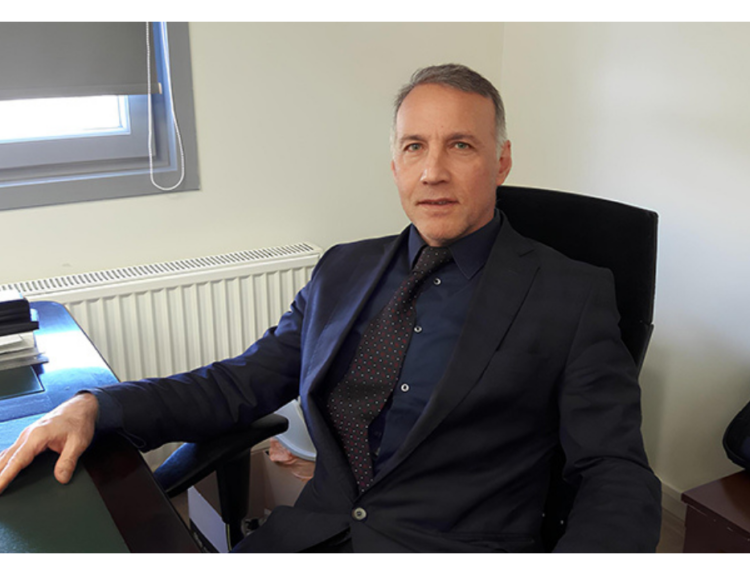
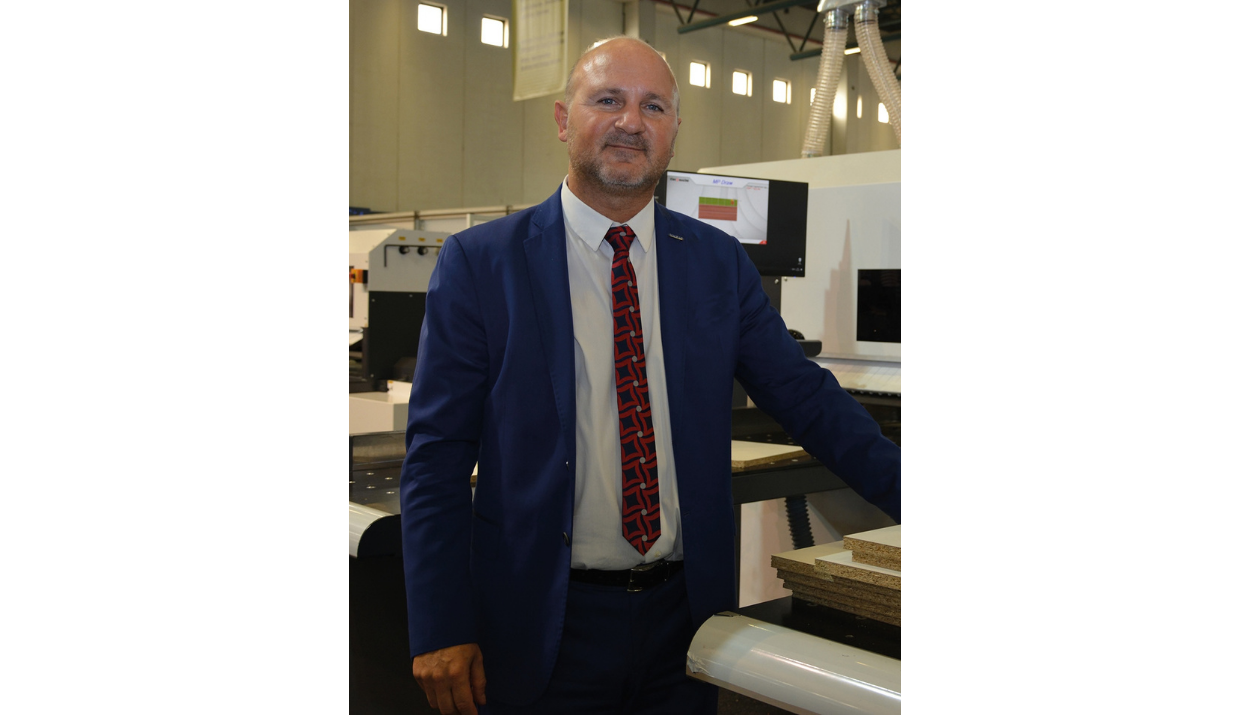
Competition in the woodworking machinery market in Europe is being reshaped in line with technology, efficiency, automation and changing customer expectations. Turkish manufacturers are also trying to strengthen their positions in this market with their experience and ability to respond to different needs. We spoke with President of AIMSAD Mustafa Sabri Erol about the current position of the Turkish woodworking machinery sector in Europe, the key differences between it and European manufacturers, and the areas that will determine its competitiveness in the coming period.
Europe is one of the markets where some of the world’s most established machinery manufacturers operate and where competition standards are quite high. Many factors, from technology investments and automation to brand strength, determine manufacturers’ positions in the market. The Turkish woodworking machinery sector has also been operating in the European market for many years and is among the important players in competition with its production experience and ability to adapt to different markets. We evaluated the position of Turkish manufacturers in Europe and the areas in which they differentiate themselves in competition with President of AIMSAD Mustafa Sabri Erol. President Erol explained to TWM Magazine the sector’s current strength in the European market, the points at which it differs from its competitors, and the areas that will take this position further.
- How do you assess the current position of the Turkish woodworking machinery sector in the European market?
Europe is both a large market and a market where competition is quite strong in terms of woodworking machinery. Countries with a long-established machinery manufacturing culture, particularly Germany and Italy, have significant weight here. The Turkish woodworking machinery sector, meanwhile, has significantly developed its production capacity, product diversity and export experience in recent years. Today, European markets such as Spain, Bulgaria, Poland, Kosovo and Romania are among the important export destinations. In the first seven months of 2026, our sector achieved exports worth $69 million. During the same period, the export unit value per kilogram was $22.14 for CNC machining centers, $14.94 for planing and milling machines, and $11.46 for sawing machines. The fact that our sector’s figures for these product groups are above their import unit values shows that our sector is capable of producing value-added products. I believe that in order to further strengthen our position in Europe, we need to move beyond a price-oriented approach to competition and place greater emphasis on our capabilities in technology, quality, engineering and product development.
“Being able to move quickly is one of the most important advantages of Turkish manufacturers”
- When you compare Turkish woodworking machinery manufacturers with manufacturers in Europe, in which areas do you think the main differences emerge?
There are well-established, large-scale companies in Europe that have specialized in certain product groups for many years. The structure of our Turkish companies is different in many respects. A significant proportion of our companies can act more agilely, manage decision-making processes more quickly and respond to new demands coming from the market in a short time. In the woodworking sector, customers’ production scales, the materials they use and the technologies they require can vary considerably from one another. Turkish manufacturers have significant experience in adapting to this diversity. Therefore, I believe that one of the most important characteristics of our sector is its ability to quickly adapt to changing conditions and customer needs.
- Which criteria are becoming more decisive today in the machinery investments of European customers? To what extent can Turkish manufacturers meet these expectations?
Price, of course, remains important in machinery investments, but it is no longer the sole determining factor. Production capacity, energy consumption, level of automation, ease of use, production precision and the overall efficiency that the machine will provide to the business are being taken into much greater consideration. Especially in Europe, the more efficient operation of machines is becoming increasingly important due to energy costs and sustainability targets. We see that Turkish companies are also making investments to meet these expectations. Our sector is highly open to development in automation, software, energy efficiency and production technologies that provide higher precision. The continuation of investments in these areas in the coming period will be quite important for our competitiveness in Europe.
“Proximity to Europe is important, but it is not sufficient on its own”
How do Türkiye’s geographical proximity to Europe and its long-standing commercial relations with Europe reflect on the sector?
Geographical proximity is certainly an important factor. However, it would not be correct to explain Türkiye’s importance for Europe solely in terms of distance. Turkish industry has been engaged in intensive trade relations with Europe for many years, and the scale of this relationship is also clearly reflected in the figures. While trade in goods between Türkiye and the European Union exceeded 217.6 billion euros in 2025, Türkiye maintained its position as the EU’s fifth-largest trading partner. During the same period, 42.7% of Türkiye’s total goods exports were made to EU countries. Thanks to this strong trade integration, our companies are closely familiar with the quality expectations, technical standards and ways of doing business of the European market. This accumulated experience also provides significant expertise to the machinery sector. At the same time, Türkiye’s strong industrial infrastructure and its connections with different manufacturing sectors enable machinery manufacturers to follow new technologies and customer needs more closely. Geographical proximity is an important advantage supporting this structure, but what will make it permanent is once again the quality and technology of the product and the added value it delivers.
- What kind of picture do you see between Turkish manufacturers and manufacturers in Europe in terms of technology, automation, digitalization and energy efficiency?
Large manufacturers in Europe have significant expertise built up over many years, particularly in R&D, automation and digital technologies. Turkish companies have also started investing more in these areas recently. Today, there are many companies in our sector that increase the level of automation, make machines more integrated with production lines, enable the monitoring of production data and develop solutions aimed at reducing energy consumption. However, I believe that we need to spread this transformation across a broader base. In the coming period, it will not be sufficient merely to manufacture mechanically strong machines. Software, data utilization, automation and energy efficiency will be among the fundamental elements determining the value of the machine. Investments to be made in these areas will directly affect the competitiveness of Turkish manufacturers.