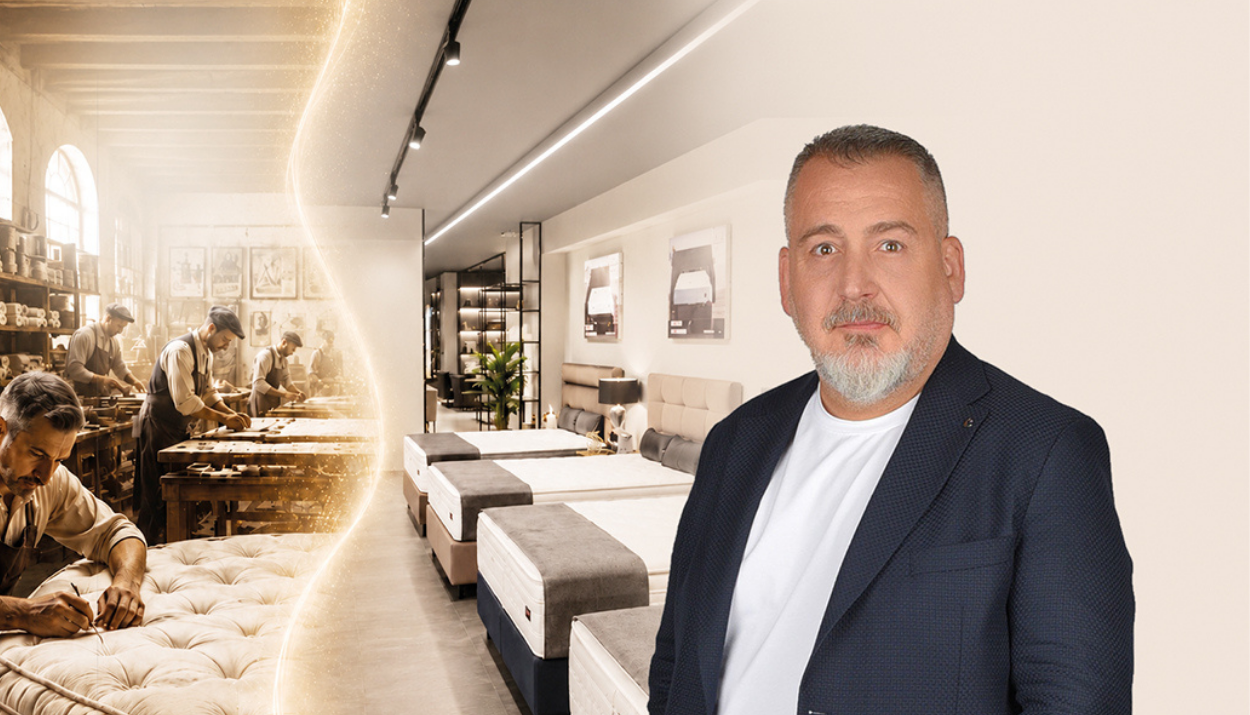
As quality sleep has become one of the indispensable elements of a healthy life, consumer expectations and technological transformation in the mattress sector are also ushering in a new era. IDAS CEO and Board Member Salih Şişman noted that Türkiye is one of the world’s major production centers in mattress manufacturing thanks to its strong industrial infrastructure, skilled human resources and export capability, and said that Turkish manufacturers have achieved significant success in many international markets in recent years through their quality, production flexibility and competitive structures.
With the changing understanding of healthy living, sleep has gone beyond daily rest and become one of the fundamental elements that directly affect quality of life. Rising consumer expectations regarding ergonomics, hygiene, material quality, durability and personalized comfort are reshaping product development and production processes in the mattress sector. Technological developments, sustainable materials and data-driven solutions are playing an increasingly decisive role in the future of the sector. In our interview with IDAS CEO and Board Member Salih Şişman, we discussed the current position of Türkiye’s mattress sector, its growth potential and changing consumer habits. Şişman also assessed the impact of awareness of sleep health on purchasing decisions, the reflections of technological developments on product and production processes, personalized sleep solutions and expectations for the sector over the next decade.
- In the past, purchasing a mattress was merely an ordinary, furniture-focused need. Today, however, this perception appears to be changing along with healthy living trends. From a consumer’s perspective, where does the mattress sector stand today?
One of the most important changes in recent years has been the recognition of sleep not merely as a period of rest but as one of the fundamental elements of a healthy life. Today, people invest in quality sleep as much as they invest in nutrition, exercise and mental well-being. This change has naturally transformed the position of the mattress sector as well. A mattress is now not merely a piece of furniture; it has become a product that directly affects quality of life, is associated with health and continuously develops through technology. When making purchasing decisions, consumers evaluate not only design or price but also ergonomics that support spinal health, the quality of the materials used, hygiene features and the product’s long-term performance. We consider this extremely valuable for our sector. This is because an informed consumer is one who seeks quality and the right product. This encourages the sector to develop continuously and generate greater added value.
“Turkish manufacturers have achieved significant success with their quality, production flexibility and competitive structures”
- What can you tell us about the current size and growth potential of the mattress sector in Türkiye?
Türkiye is one of the world’s major production centers in mattress manufacturing thanks to its strong industrial infrastructure, skilled human resources and export capability. Particularly in recent years, Turkish manufacturers have achieved significant success in many international markets through their quality, production flexibility and competitive structures. Nevertheless, our sector still has considerable room for growth. While consumers in developed countries replace their mattresses every 7-10 years on average, this period remains longer in our country. We believe that consumers’ replacement habits will also change as awareness of sleep health increases. On the other hand, I believe that growth will occur not only in terms of units but also in value-added production. The share within the sector of personalized products that incorporate higher technology and are manufactured with sustainable materials will increase every year.
How have consumers’ mattress preferences changed in recent years? Which criteria stand out in purchasing decisions today?
In the past, consumers generally adopted the approach that “it should be durable.” Today, however, they ask, “What kind of sleep experience will it offer me?” Ergonomics, spinal support, pressure distribution, breathability, natural and hygienic materials, the warranty period and brand reliability have now become far more decisive in the purchasing process. In addition, with digitalization, consumers research, compare and make informed choices. This is a highly positive development for brands. This is because not only the product but also information, trust and the long-term user experience have become part of the value being purchased..
“We begin our product development processes with user needs”
- The right mattress may be different for everyone. Which criteria do you consider in your product development processes?
Our fundamental approach is this; there is no single perfect mattress, there is the right mattress for the right user. Therefore, we begin our product development processes with user needs. Since age, weight, sleeping position, lifestyle and personal comfort expectations differ, we develop solutions for different segments. As IDAS, we combine our nearly 60 years of production experience with our strong R&D activities. We continuously work on next-generation spring systems, foam technologies of different densities, breathable fabrics and long-lasting materials. For us, innovation is not merely developing a new product; it is being able to improve every detail that will enable people to sleep better.
- How is awareness of sleep health reflected in consumers’ mattress preferences?
Consumers are now aware that quality sleep affects many areas, from the immune system to mental performance and from daily energy to chronic conditions. As this awareness increases, expectations also change. Antibacterial fabrics, breathable surfaces, systems that support body ergonomics and natural materials are seeing greater demand. As a sector, we do not merely manufacture products; we also contribute to the development of a proper sleep culture. This is because the true value of a quality mattress lies in the long-term quality of life it provides to the user.
“What matters is being able to transform technology into a genuine user need”
- How are technological developments affecting the mattress sector? Which innovations have come to the fore in recent years?
The mattress sector has moved far beyond the conventional understanding of production. Materials science, engineering and data-driven product development processes are rapidly transforming our sector. Next-generation hybrid systems, advanced spring technologies, high-performance foam structures, fabrics that optimize temperature and moisture balance, and sustainable production techniques constitute the sector’s main areas of development today. In addition, smart sleep technologies are also developing rapidly around the world. Sensors that analyze sleep quality and artificial intelligence-supported systems will become more accessible in the coming years. However, technology alone is not sufficient. What matters is being able to transform technology into a genuine user need. We shape all our investments in line with this understanding.
- Looking 10 years ahead from today, in which areas do you foresee the greatest change in the mattress sector?
I believe that the next decade will be defined by three key concepts; personalization, sustainability and digitalization. First, the standard product approach will give way to personalized sleep solutions. Consumers will prefer products designed according to their own physical characteristics and sleeping habits. Second, sustainability will cease to be merely a matter of social responsibility for brands and will become one of the main determinants of competitiveness. Recyclable materials, environmentally friendly production processes and a low carbon footprint will become the sector’s new standards. The third major transformation will take place around data and artificial intelligence. Systems that analyze sleeping habits, technologies that develop personalized recommendations and smart sleep ecosystems will shape the future of our sector. As IDAS, we aim to be one of the active players in this transformation by combining our long-established production culture with an innovative perspective. The most important truth that more than sixty years of experience has taught us is this: Every investment that improves people’s quality of life is the most valuable investment in the future. With this understanding, we will continue to produce, develop and add value to our sector.