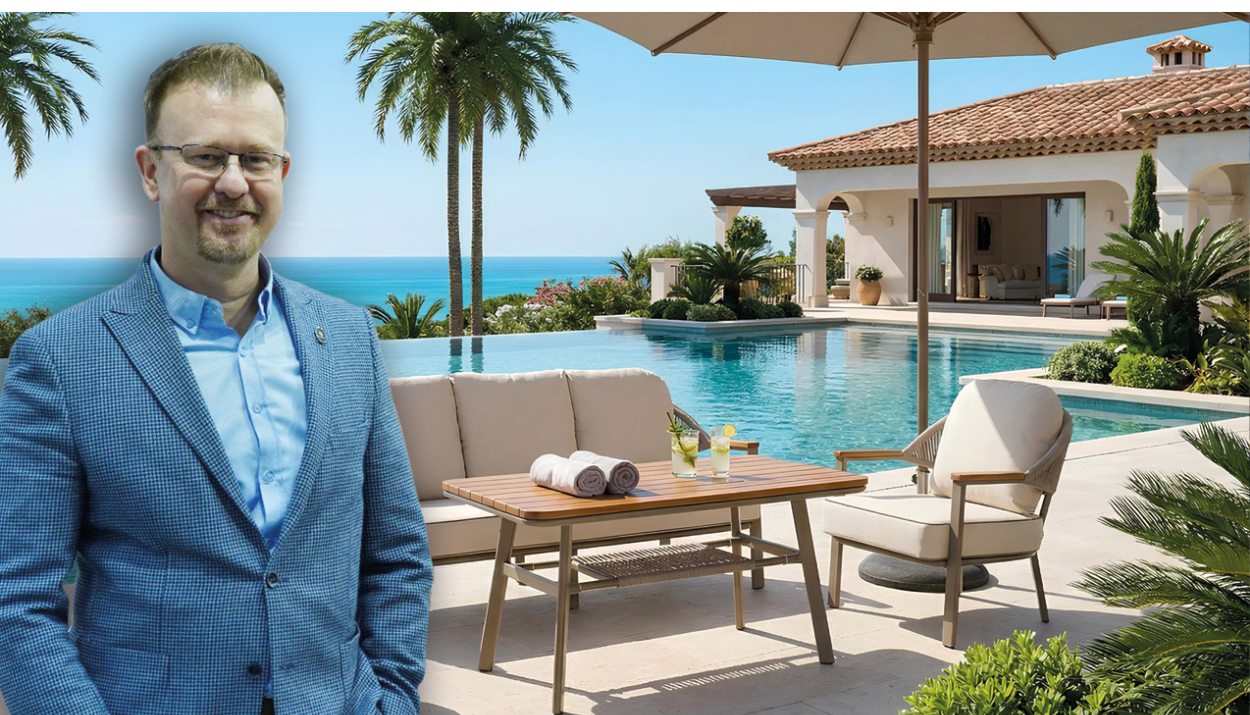
Many aspects of the outdoor furniture sector, from export markets to consumer preferences, are being reshaped. Murat Gezginci, Founder and Chairman of Exit Garden, assessed the current outlook of the sector, Türkiye’s position in global competition and expectations for the coming period.
Rising costs and changing consumer preferences are reshaping many processes in the furniture sector, from production to exports. Particularly in outdoor furniture, the balance between design, price, quality and delivery speed is among the defining elements of competition. We spoke with Murat Gezginci, Founder and Chairman of Exit Garden, about the sector’s performance in 2026, opportunities in the Gulf and Balkan markets, global competitive conditions and the trends expected to come to the fore in the period ahead.
- How would you assess the first half of 2026? What are your expectations for the second half of the year?
The first half of 2026 fell below our expectations, particularly due to global risks, economic uncertainties and contraction in the markets. Nevertheless, without compromising our vision or our understanding of quality, we continue our investments to establish a more efficient and stronger production structure. We expect market conditions to achieve a more balanced structure in the coming period. We believe that new opportunities will emerge in the second half of 2026 and beyond for companies that preserve their production strength, adapt to change and remain committed to their principles.
“We have shaped our export markets around the Gulf countries and the Balkan region”
- Which markets stand out in the Turkish furniture sector’s exports? Are there any new countries you expect to come to the fore in 2026?
As an outdoor furniture manufacturer, we have shaped our export markets primarily around the Gulf countries and the Balkan region. We believe that investments in Saudi Arabia and the United Arab Emirates will regain momentum, particularly once the war-related tensions in the Gulf Region come to an end. We expect ongoing residential and commercial projects in these markets to support demand for outdoor furniture. In the Balkan countries, we believe that proximity, logistical advantages and interest in Turkish products offer important opportunities for our exporters.
- Which countries are the strongest players in the outdoor furniture segment on a global scale? What are Türkiye’s strengths and weaknesses compared with these countries?
In terms of design, Italy has always been one of the sector’s leading countries with its long-established expertise and strong brand perception. China, however, is the clear leader in terms of production capacity, scale and cost advantage. Türkiye’s most important advantages are its geographical location and young population. However, the support provided by the Chinese government to its exporters in particular creates a serious disadvantage for us in meeting target prices.
“We observe that woven models are attracting strong interest from consumers”
- Which trends will come to the fore in outdoor furniture during the remainder of 2026?
This year, we have observed that woven models in particular are attracting strong interest from consumers. We believe that these designs, which offer a natural and warm appearance, will continue to stand out in outdoor furniture in the second half of the year.
- How have consumer expectations changed in recent years? As a company, how do you reflect this change in your design and production processes?
Consumer expectations have recently become largely price-focused due to the current economic climate. To adapt to these conditions, we are constantly working to improve costs and increase efficiency in our production processes. However, limited financing opportunities negatively affect both our investment decisions and our ability to offer competitive prices.
“We believe that the Turkish woodworking machinery sector has made significant progress in terms of product quality and technical competence”
- How do you assess Turkish woodworking machinery?
We believe that the woodworking machinery sector in Türkiye has made significant progress in terms of product quality and technical competence in recent years. Although imported machinery continues to have a strong presence in the market, we observe that domestic manufacturers are gradually gaining a stronger position. The continued development of domestic machinery in terms of quality and technical competence presents a positive outlook for the future of the sector.