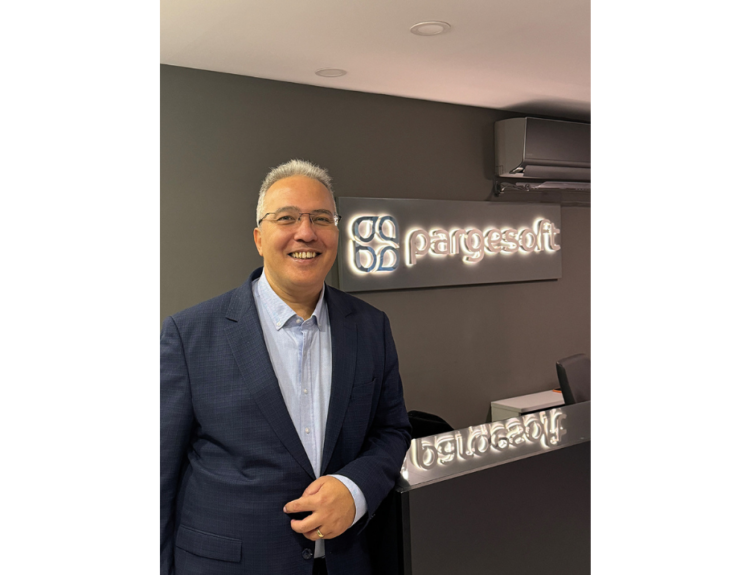

Political tensions between countries, changes in trade policies and new regional agreements are leading to changes in global supply chains. Emphasizing that the EU-Mercosur agreement may change competition conditions and supply flows, especially in some product groups, Turkish Association of Purchasing Managers and professionals (TUSAYDER) Co-President Dr. Mehmet Sarıdoğan pointed out that in the new period, companies should compete not only with cost advantage but also with speed, reliability, traceability and provable performance criteria.
The global transformation in supply chains affects many dynamics at the same time, from geopolitical developments to trade agreements, from digitalization to regionalization. Especially in this period when new trade structures such as the EU-Mercosur agreement reshape competitive balances and supply flows, companies’ risk management, multiple supply strategies and data-based decision mechanisms are becoming more critical than ever. In this context, we met with Dr. Mehmet Sarıdoğan, Co-Chairman of TUSAYDER, to discuss the changing priorities in supply chain management, global trends and Türkiye’s position in this new equation.
- What exactly does the concept of supply chain mean and why has it become such a critical topic recently?
We can characterize the concept of supply chain as the entire journey of a product or service from the “birth of the idea” to the moment it reaches the customer. It is an end-to-end value stream from demand forecasting to planning, from procurement to production, from warehousing to logistics, and even return processes. The reason why it has recently become critical is that competition is no longer won by simply producing good products; it is necessary to deliver the right product to the customer at the right time, at the right cost and by managing risks. In the 2026 perspective, regionalization, multi-sourcing, geopolitical alignment and data-driven visibility have become the most decisive trends.
“Alternative supplier, alternative route, correct inventory policy is a must”
- What did the supply and logistics problems experienced after the pandemic clearly show to companies? What lessons were learned from this process?
The pandemic showed us very clearly that “lowest cost” alone is not the right target. Because when there is a break in supply, behind that low cost, there are huge delays, freight, capacity and lost sales costs. Companies have learned three important lessons in this process;
- Resilience is designed: Alternative supplier, alternative route, correct inventory policy is a must.
- Visibility is based on data: If your data is not standardized, there is no early warning.
- Planning now means scenario management: The era of fast decision-making scenarios, not a single plan, has begun.
“Companies are moving from being dependent on a single geography to a multi-center network”
- Why did the concepts of nearshoring and friend-shoring, which we have heard a lot lately, emerge? What do these approaches mean for companies?
Nearshoring and friend-shoring are actually an effort by companies to re-establish the “risk-speed-cost” balance. Nearshoring means production and supply close to the market. Lead time is shortened, the need for inventory is reduced, and you respond to customer demands faster. Friend-shoring, on the other hand, means working with more compatible, more predictable countries; in other words, reducing surprises due to sanctions, export restrictions or political tensions. The picture we see in 2026 is that companies are moving from being dependent on a single geography to a more regional, multi-center network.
- How are tensions between the US and China and geopolitical developments affecting supply chains? How are companies reacting to this picture?
Geopolitical tensions affect the supply chain in three ways: cost changes with tariffs, access to some products becomes more difficult with export controls, and supply risk increases in critical minerals and technology components. Especially in the case of critical minerals, blocking of countries leads to a redesign of the supply chain starting from raw materials. Companies are responding with multiple supply strategies such as “China+1”, long-term contracts and strategic stocks for critical items, as well as risk-based order routing. In other words, the decision-making mechanism is increasingly becoming a “risk-reading” system.
“Proximity to Europe and production capability is a serious opportunity in supply networks”
- Where do you see Türkiye in this global transformation? What are the main challenges Türkiye needs to overcome?
Türkiye has a strong advantage; its proximity to Europe and its production capability. This is a serious opportunity in regionalized supply networks. But for this opportunity to become a lasting advantage, we need to overcome some challenges. Logistics efficiency, predictability, energy and green transformation, data standards and digital competence are among the main ones. Because today, “close production” by itself is not enough; transparency, traceability and proof of performance are expected in addition to speed.
“EU customer should be offered a package of speed, trust and demonstrable performance”
- Considering the possible effects of the trade agreement between the EU and Mercosur countries, what position do you think Türkiye should take?
The EU-Mercosur agreement could change competition and supply flows in the EU market for some product groups. The process is still on the agenda at the beginning of 2026 and the evaluation dimension is still ongoing. What is critical for Türkiye is that we cannot stay in the competition just by saying we are close. We need to clearly analyze in which areas competition will increase on a category basis and invest in compliance, traceability, quality and delivery performance. In other words, the EU customer should be offered a package of “speed, trust and demonstrable performance.”
- How should we establish our position in import channels in these days when digital purchases come to the forefront?
As digital imported purchasing grows, two things grow at the same time: opportunity and risk. There is a price advantage, but risks such as fake suppliers, delivery delays, customs and paperwork issues, returns and warranty costs are also increasing. Therefore, five approaches are essential for the right position in import channels: supplier verification, total landed cost calculation, risk-based purchasing rules, shipment visibility and performance management. If we manage digital channels not like free purchasing, but with the logic of a control tower that monitors end-to-end and gives early warnings, we will both reduce costs and minimize surprises.