Located in southwestern Türkiye at the intersection of the Aegean and the Mediterranean, Muğla is a city that bears the traces of different historical periods; today, it stands out with its tourism, agriculture, and maritime activities. With settlements that have developed in close harmony with nature and a strong tourism and production structure, Muğla ranks among the region’s key centers both economically and culturally.
Located in southwestern Türkiye at the point where the Aegean and the Mediterranean meet, Muğla is a city that bears the traces of different periods throughout history. Today, together with tourism, agriculture, and maritime activities, it ranks among the most economically and culturally dynamic centers of the region. Its settlement history dating back to Antiquity, its urban structure developing in harmony with nature, and its strong tourism infrastructure set Muğla apart from being merely a holiday destination visited only during the summer months. Centers such as Bodrum, Marmaris, Fethiye, and Datça play an important role in the city’s recognition both domestically and internationally as the most visible stops of this structure. With its long coastline, peninsulas, and mountainous areas extending inland, the city simultaneously experiences the influence of two different climate zones.
One of Türkiye’s leading provinces in terms of forest assets, the mountainous areas located in the north and interior of the city rank among the main elements shaping its natural structure. Rising from the coast toward inland, these areas form a broad green belt consisting of the forested zones around Yatağan and Bayır, the foothills of Sandras (Çiçek Baba) Mountain, Babadağ, and the forest areas surrounding the Gulf of Gökova. While Mediterranean plants such as olive, carob, bay laurel, and oleander stand out in regions close to the coastline, red pine, cedar, and black pine forests spread over wider areas inland.
Agriculture and tourism develop together
Although the Muğla economy is often associated with tourism, agriculture still holds an important place in the city’s economic structure. Olive, citrus, almond, and honey production are among the main sources of livelihood, especially in rural areas. In Muğla, one of the cities that stand out across Türkiye in pine honey production, agricultural activities have long continued to be one of the main pillars of the regional economy.
In recent years, with the branding of agriculture-based products and their orientation towards export, the Muğla economy has become more diversified. This transformation is particularly visible in areas such as;
- Olive oil and olive products,
- Honey and beekeeping products,
- Almond and local agricultural products.
Tourism stands out as Muğla’s strongest and most dynamic sector. Alongside maritime tourism, yachting, nature sports, and cultural tourism are developing as complementary areas throughout the city. Thanks to this structure, tourism in Muğla is not confined to the summer months; it creates activity spread across different periods of the year. In particular, nature walks, cultural routes, and yacht tourism bring vitality to the city even during the off-season.
Natural trails stretching from Saklıkent Canyon to Lake Bafa
In Muğla, which is often known for its coastal settlements, natural diversity takes on a more distinct character as you move away from the coast. Saklıkent Canyon, stretching between high rock walls, is one of the most notable stops for those seeking contact with nature, especially in summer, thanks to its cool air and hiking trails. Bafa Lake and its surroundings offer a more tranquil and timeless nature experience with hiking trails, bird watching areas, and ancient ruins scattered around the lake. These areas demonstrate that, alongside the coastal lifestyle in Muğla, the natural and cultural riches of the inland regions also thrive strongly.
Fishing, yachting, and maritime trade are fundamental to life
In the city, the sea is not merely a tourist backdrop but a direct part of daily life. In coastal settlements, fishing, yachting, and maritime trade form the basis of both economic and social life. This structure, stretching from small fishing villages to international marinas, reveals that the city’s relationship with the sea is not temporary, but established and deep-rooted. In Muğla, the sea is not just a landscape to be admired; it continues to be one of the main elements that determine working practices, lifestyle habits, and urban culture.
A cuisine ranging from olive-oil dishes to seafood
The city’s cuisine brings together the simple yet robust flavors of Aegean and Mediterranean cuisines. Olive-oil-based vegetable dishes, herbs, and seafood form the foundation of the cuisine. While olive oil holds a defining place in everyday cooking, seasonally changing herb dishes and vegetable-focused recipes frequently appear on tables. Çökertme kebab, keşkek, sautéed herbs, and various seafood are counted among the region’s standout flavors. While fish and seafood have a more prominent place in coastal areas, traditional meat- and grain-based dishes stand out in the interior. Olive oil, honey, and local products sold in local markets keep the connection between culinary culture and daily life alive.
Top places to visit in Muğla
Muğla brings together numerous routes within the same geography, ranging from ancient cities to natural areas, coastal towns to tranquil peninsulas. These stops, spread across different districts of the city, take Muğla beyond a single-center vacation concept. The most prominent routes are as follows:
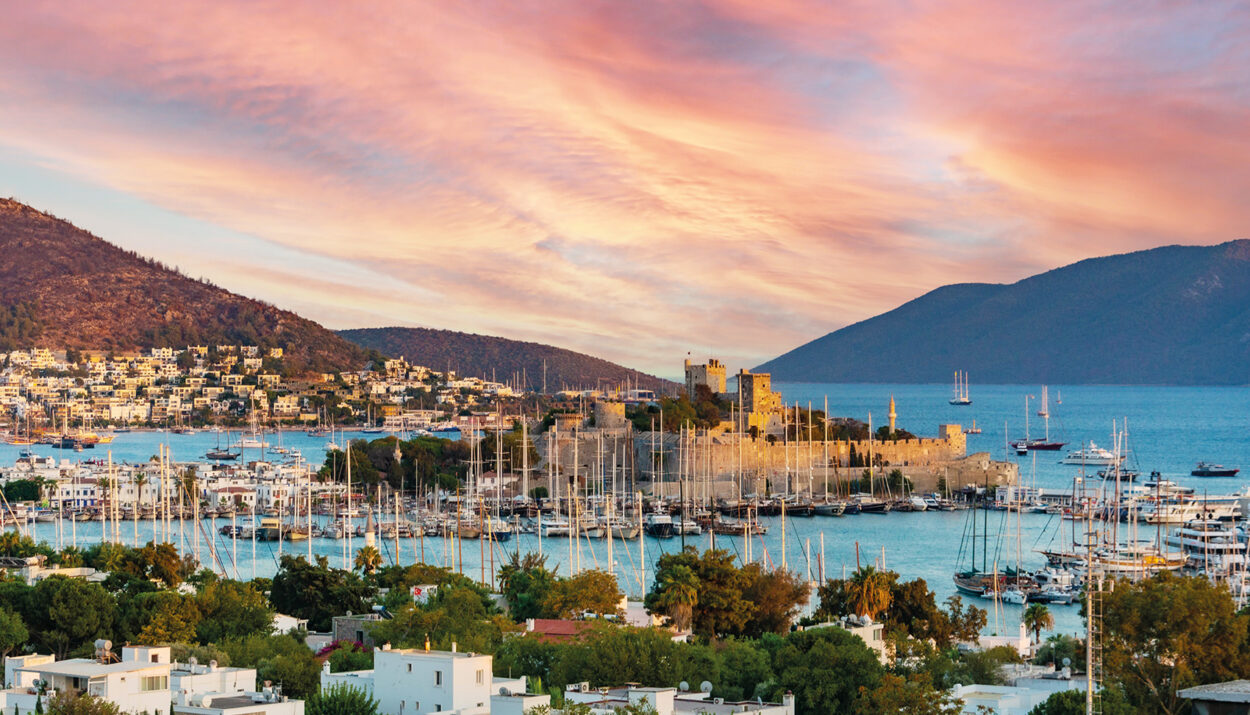
- Bodrum: Built on ancient Halicarnassus, Bodrum is Muğla’s most well-known center with its castle, marina, and cultural and artistic events. History, the sea, and urban life intertwine here.
- Bodrum Castle: Built by the Knights of St. John, the castle now hosts the Museum of Underwater Archaeology and stands out as a symbol of Bodrum.
- Fethiye: Drawing attention with its rock tombs, bays, and nature sports, Fethiye is an important stop where history and nature can be experienced together.
- Ölüdeniz: World-renowned for its calm lagoon and turquoise color, Ölüdeniz is one of the most preferred spots for swimming and paragliding.
- Datça Peninsula: With its low-density development, almond trees, and tranquil character, it is among Muğla’s most natural and peaceful regions.
- Ancient City of Knidos: Located at the intersection of the Aegean and the Mediterranean, Knidos was one of the important centers of antiquity with its planned urban layout and harbors.
- Marmaris: With its natural harbor, forest-surrounded setting, and yacht tourism, Marmaris is one of the main centers reflecting Muğla’s maritime identity.
- Göcek: With its natural harbor, forest-surrounded setting, and yacht tourism, Marmaris is one of the main centers reflecting Muğla’s maritime identity.
- Ancient City of Stratonikeia: One of Türkiye’s largest marble cities, bearing traces of continuous settlement from ancient times to the Ottoman era.