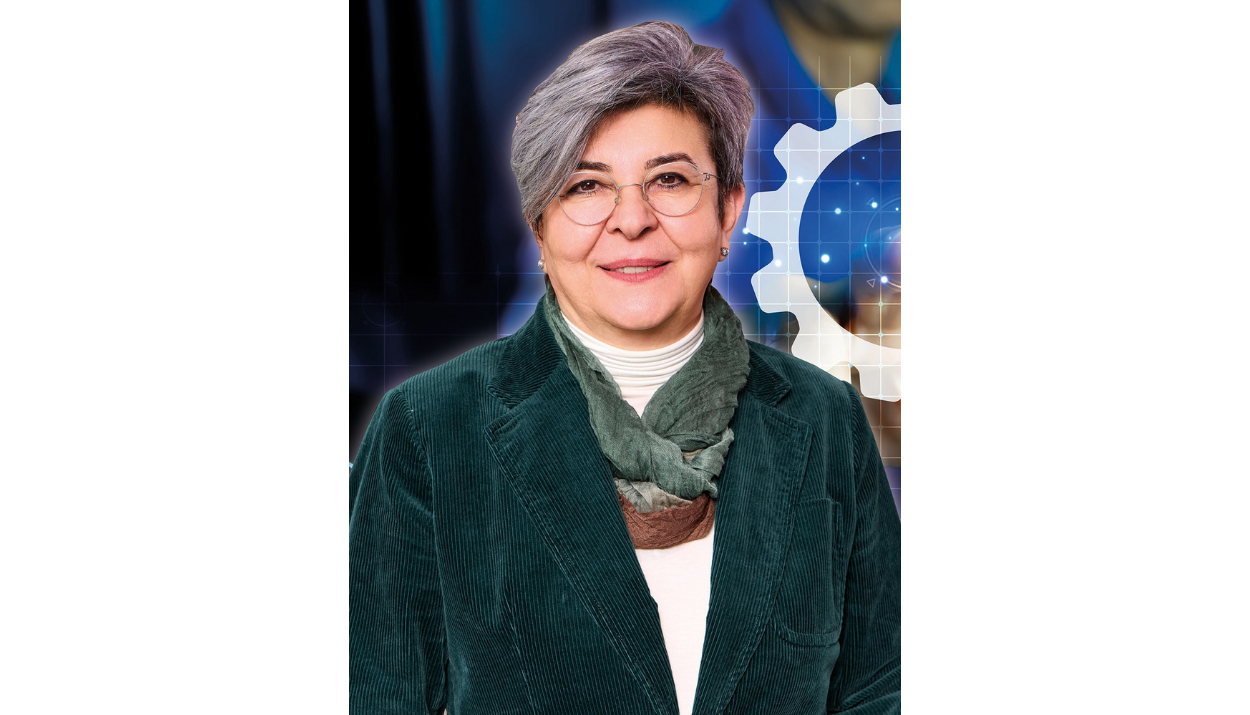
While Europe continues to be one of the most important export markets for the Turkish machinery sector, changing competitive conditions, technical standards and transformations in supply chains are making the sector’s position in this market even more important. Sevda Kayhan Yılmaz, Chairperson of Turkish Machinery, stated that the
Turkish machinery sector operates within the same production and engineering ecosystem as Europe, emphasizing that high technical compatibility, production flexibility, value-added production and strong supply capabilities have positioned Türkiye as a strategic technology partner in European value chains.
With its high technical standards, strong industrial infrastructure and evolving production policies, Europe continues to be one of the most important and most intensely competitive markets for the Turkish machinery sector. However, competition in the market is no longer shaped solely by product quality and price; engineering capabilities, energy efficiency, sustainability, digital traceability, after-sales services and supply security are also becoming increasingly decisive in purchasing decisions. On the one hand, the European Union’s policies aimed at strengthening local production, and on the other hand, geopolitical developments and changing supply chains are bringing new opportunities and new requirements for Turkish manufacturers. We discussed the Turkish machinery sector’s current position in the European market, its strengths that stand out in competition, the changing expectations of European customers and the areas the sector should focus on in the coming period with Sevda Kayhan Yılmaz, Chairperson of Turkish Machinery.
- Europe is one of the important markets for Türkiye’s machinery exports. How do you evaluate the position of Turkish machinery manufacturers in the European market?
Europe, where high engineering standards prevail and trade in high-technology products dominates, is Türkiye’s largest market for machinery exports. Developed countries with a very strong industrial culture, such as Germany, Italy, the United Kingdom and Spain, are at the center of our exports. Our bilateral trade with these countries, which has increased for many years, also has a positive impact on the standards of our machinery. By combining the advantage of the Customs Union with our compliance with technical legislation, we operate within exactly the same manufacturing ecosystem as Europe. We share the same production discipline and speak the same engineering language. Our business partners define us as an extremely reliable strategic partner in the global value chain with whom they can share sensitive technologies and conduct joint R&D processes. We are working to develop the factors that distinguish us from our other competitors and make us stand out in the European market.
“Our sector’s identity as a reliable technology partner sets us apart”
-
What do you think are the main characteristics that distinguish Turkish machinery manufacturers from their competitors in the European market?
The operational flexibility of our businesses and our sector’s identity as a reliable technology partner set us apart. The ability of our companies to respond quickly to geopolitical shocks and successfully maintain structural transformation under all conditions provides a competitive advantage. We are moving beyond old models focused directly on production volume. We are present in the market with technological solutions featuring advanced automation capabilities and high engineering intensity. Even during periods when global production volumes contract, we steadily increase our export unit value through our value-added production strategy. This picture, which is also reflected in our export figures, clearly demonstrates our sector’s smart, flexible and highly efficient production structure.
- What criteria are currently coming to the forefront in European customers’ machinery purchasing decisions? Where do Turkish manufacturers stand in terms of meeting these expectations?
In this market, where industrial efficiency and sustainability targets are decisive, European customers’ purchasing decisions are guided by a comprehensive service and value package. In addition to the physical quality of machinery, high engineering expertise, installation, integration, maintenance and strong after-sales service are demanded as a whole. Our customers also want to obtain the process knowledge that will directly maintain the efficiency of their own production lines. Within the framework of EU regulatory requirements aligned with climate targets, conditions such as reducing the carbon footprint, energy efficiency and digital traceability directly shape purchasing processes. As the Turkish machinery sector, we are positioned at the heart of these high standards with our Twin Transformation vision. We provide intensive institutional guidance to strengthen our companies’ data analytics, circular economy models and automation infrastructures.
“Our country is ideally positioned for European industry with both its high technical compatibility and cost structure advantage”
- In your opinion, what position does Türkiye occupy between strong manufacturers such as Germany and Italy and countries with high price competitiveness such as China?
The strict rules of the West, shaped by cybersecurity and low-carbon standards, and the East’s advantages in scale and raw materials outline the main dynamics of competition in the global market. In this equation, Türkiye operates in full compliance with the high quality and integration standards of engineering powerhouse countries such as Germany and Italy. For European industry seeking to offset increasing production costs due to protectionist policies and geopolitical risks, our country is ideally positioned with both its high technical compatibility and cost structure advantage. We integrate our own engineering capacity and production agility with Europe’s strong industrial architecture. Thanks to this synergy, we serve as a sustainable and competitive supply base that fuels the innovation power of European value chains.
- How do you expect competitive conditions in the European market to change in the coming period? Which areas do you think the Turkish machinery sector should focus on during this process?
As concerns over technological sovereignty and supply security continue, we expect competition in the European market to take on a tougher structure centered on protectionist policies. With regulations such as the Industrial Accelerator Act, the EU aims to secure local production capacity, while seeking to expand its global market network through the new free trade agreements it has signed. At the same time, driven by escalating geopolitical tensions, budget priorities are gaining strong momentum toward defense and security from civilian industry. During this transition, it is of great importance for our sector to adapt its civilian production lines to the high quality, full traceability, flawless documentation and cybersecurity criteria required by military standards. With the integration brought by our Customs Union partnership, we are further reinforcing the “Made with EU” understanding and strengthening our position as a permanent and strategic technology partner in European value chains.